Trying to lose weight and not sure what to do with fruit? You’re not alone. Half the internet tells you fruit is basically nature’s candy and you should go easy on it. The other half says load up. Confusing, right?
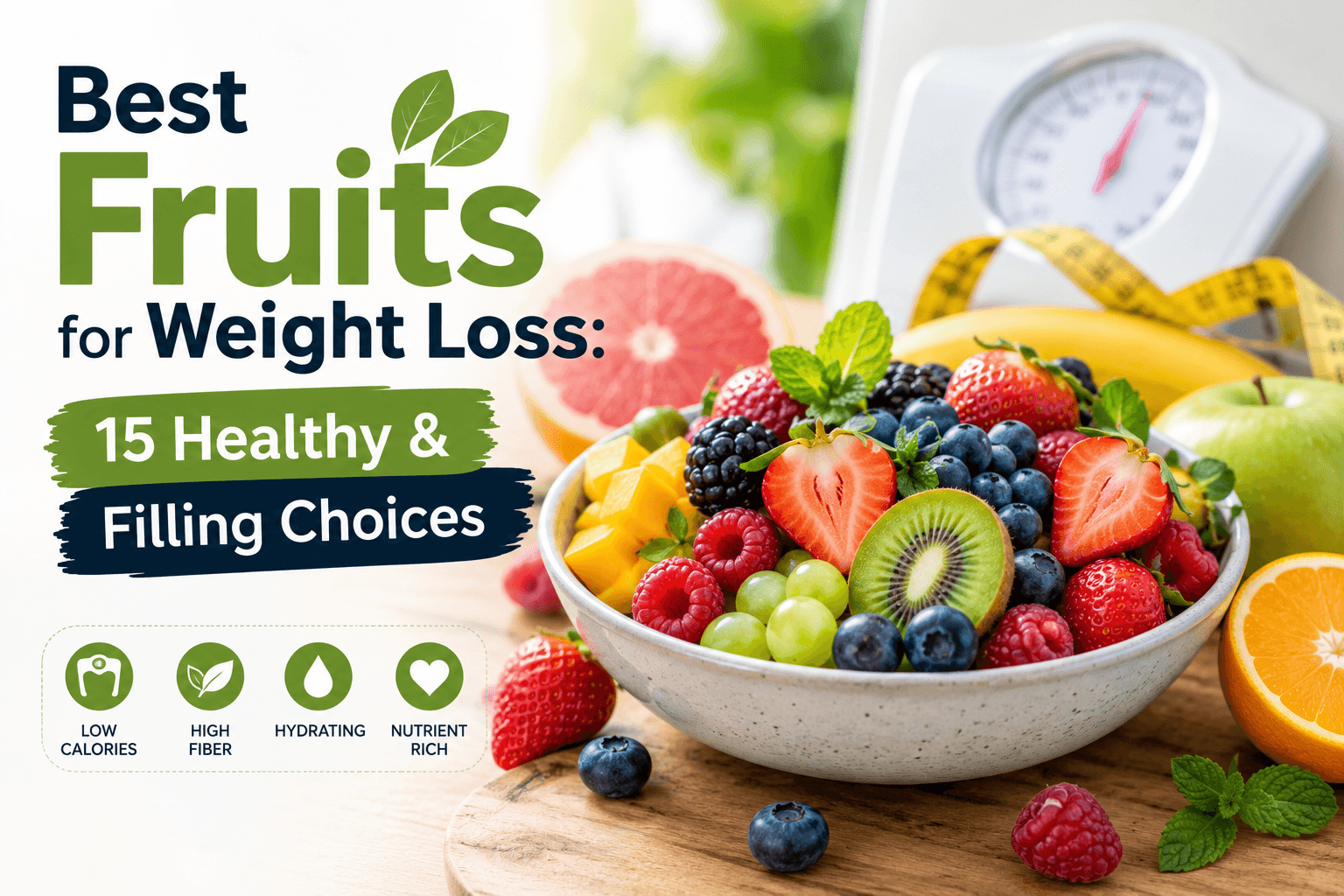
Here’s the actual answer: the best fruits for weight loss are genuinely useful, and not in a vague “eat healthy” way. Most of them are low in calories for their size, loaded with fiber, and mostly made of water — which is exactly the combination that fills you up without adding much to your daily calorie count. The trick is knowing which fruits pull their weight, how much to actually eat, and where people tend to go wrong (looking at you, fruit juice).
Below are 15 fruits worth keeping around, why they work, and how to fit them into your day without overthinking it.
What Actually Makes a Fruit “Good” for Weight Loss?
Not every fruit is equally helpful here. The ones that do the most for you tend to share a few things in common.
- Low calorie density. You get a lot of food for not a lot of calories — mostly because so much of it is water. That’s why a big bowl of watermelon barely dents your daily total, while the same volume of dried mango would blow way past it.
- A decent amount of fiber. Choosing high fiber foods can help you stay fuller for longer and make it easier to manage hunger between meals.
- High water content. Water adds bulk with zero calories. It’s a simple reason melons and citrus keep coming up in weight-loss conversations.
One thing worth saying plainly: no fruit torches fat or melts anything away, no matter what a headline promises. What fruit does do is give you a lower-calorie stand-in for less useful snacks, help you feel satisfied on fewer calories overall, and make it easier to stay in a calorie deficit — which is really the thing driving weight loss, full stop.
15 Best Fruits for Weight Loss
1. Berries (Strawberries, Blueberries, Raspberries, Blackberries)
If there’s one category that gets brought up constantly in weight-loss circles, it’s berries — and honestly, they earn it. They’re lower in sugar than most fruit, high in fiber, and raspberries and blackberries especially pack a surprising amount of fiber per cup.
Try tossing a handful into plain yogurt instead of reaching for a sugary flavored cup. Small swap, but it adds up.
2. Grapefruit
Grapefruit has this old-school reputation as a weight-loss fruit, and there’s some truth buried in the hype — it may offer a modest assist as part of an overall healthy diet, though it’s nowhere near a standalone fix. It’s low-calorie, mostly water, and has enough natural tartness to cut a sugar craving.
Worth flagging: grapefruit can interact with certain medications, including some statins and blood pressure drugs. If you’re on regular prescriptions, it’s worth a quick check with your doctor or pharmacist before making it a daily habit.
3. Apples
Apples are the “eat the whole thing” fruit — skin included. A good chunk of the fiber lives in that skin, and the crunch factor actually matters too. Chewing takes time, and that little bit of extra time can help you register fullness before you’ve overdone it.
4. Watermelon
Watermelon is roughly 90% water, which makes it one of the least calorie-dense fruits you’ll find anywhere. You can eat a genuinely large portion and barely register it on a calorie count — a solid trade if you’re craving something sweet on a hot afternoon instead of reaching for chips.
5. Oranges
Oranges give you fiber, water, and vitamin C, and the fact that you have to peel them slows you down compared to just chugging juice. Eat the whole orange rather than juicing it, and you keep the fiber that actually helps with fullness.
6. Pears
Pears rank near the top for fiber per serving, especially if you eat the skin. That makes them a smart pick for the mid-afternoon slump, when your willpower’s running low and a vending machine starts looking tempting.
7. Kiwi
Small fruit, decent nutritional punch. Kiwi gives you fiber, vitamin C, and a fair bit of potassium for very few calories. The skin is technically edible too, if you’re up for it — that’s extra fiber for free.
8. Papaya
Papaya is low-calorie and contains an enzyme called papain, which has a long history of association with digestion. It’s not some weight-loss enzyme in disguise, but a digestive system that’s working smoothly does make it easier to keep your eating habits consistent day to day.
9. Peaches
Fresh peaches, skin on, give you natural sweetness for a fraction of what you’d get from a processed dessert. They work well as an actual substitute when a sugar craving hits — not just a “healthier” version of something, but a real replacement.
10. Cantaloupe
Cantaloupe is another mostly-water fruit, similar to watermelon, but it also brings a good dose of vitamin A and potassium along for the ride. Big portion, small calorie cost.
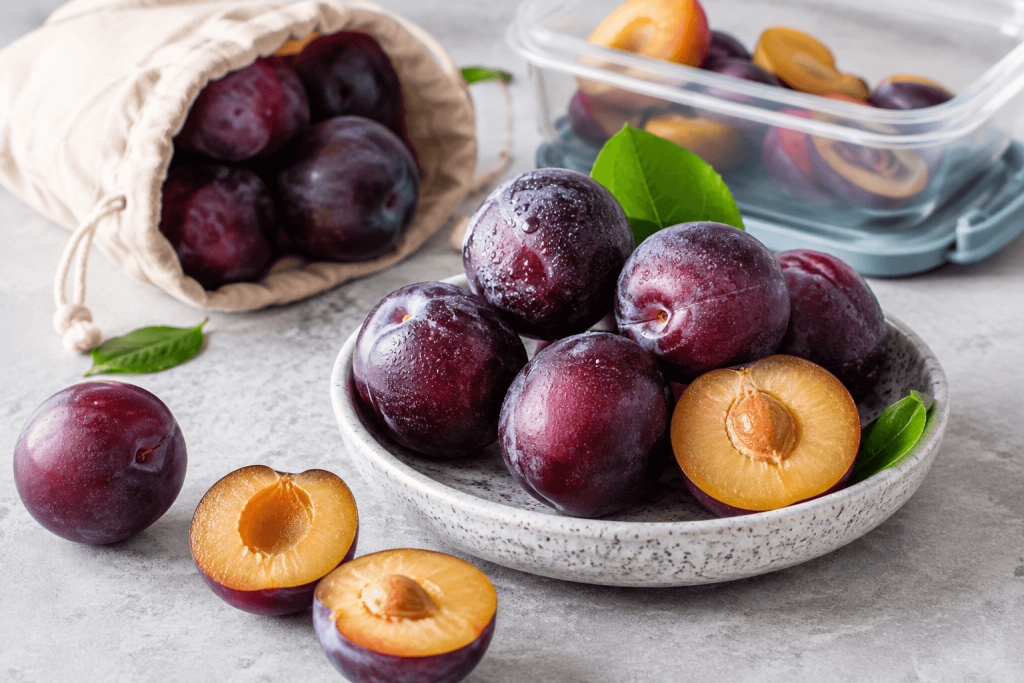
11. Plums
Plums are small and portable, which honestly matters more than people give it credit for — they’re easy to toss in a bag and eat without any prep. Low in calories, with enough fiber to take the edge off their natural sugar.
12. Pineapple
Pineapple has enough natural sweetness to genuinely satisfy a sugar craving while staying relatively low-calorie per serving. Just go for fresh, not the canned stuff sitting in syrup — that defeats the purpose fast.
13. Avocado (Yes, It’s a Fruit)
Avocado breaks the pattern here — it’s higher in fat and calories than everything else on this list. But it earns its spot for a different reason: the fat and fiber combination makes it genuinely satisfying, so a small amount can keep you full for hours and prevent overeating later. This is one where portion control actually matters, unlike the watery fruits above.
14. Cherries
Cherries are lower-calorie than most people assume, and they bring fiber and antioxidants along with them. There’s also something to be said for the fact that eating cherries — especially with pits — just takes longer, which naturally slows down mindless snacking.
15. Guava
Guava doesn’t show up in every grocery store, but it’s worth hunting down. It’s exceptionally high in both fiber and vitamin C relative to its calorie count, which makes it one of the more filling options on this entire list.
Quick Comparison: Fiber and Water Content
| Fruit | Fiber Level | Water Content | Best For |
| Berries | High | High | Snacking, adding to meals |
| Watermelon | Low | Very High | Hydration, low-calorie volume |
| Guava | Very High | Moderate | Fullness, fiber intake |
| Avocado | High | Low | Satiety, healthy fats |
| Grapefruit | Moderate | High | Breakfast, curbing sugar cravings |
How to Actually Work These Fruits Into a Weight Loss Diet
Knowing the list is one thing. How you eat these fruits changes a lot of the equation.
Eat the Fruit, Skip the Juice
Juicing strips out the fiber and leaves you with concentrated sugar — meaning it’s very easy to drink far more calories than you’d ever sit down and eat as whole fruit. A glass of orange juice can carry the sugar of two or three oranges with none of the fiber that would normally slow that sugar hitting your system.
Go Easy on Dried Fruit
Once the water’s removed, dried fruit becomes a lot more calorie-dense than people expect. A small handful of raisins can rack up several times the calories of the same weight in fresh grapes. If you like dried fruit, treat it more like a garnish than a snack portion.
Pair It with Protein or Fat
An apple with a spoonful of peanut butter. Berries mixed into Greek yogurt. Pairing fruit with protein or fat slows digestion further, keeps blood sugar steadier, and tends to cut down on cravings a couple hours later.
Use Fruit to Replace Something, Not Add to Everything
Here’s the part people miss most often: the benefit comes from what fruit replaces. Swap your usual afternoon cookie or chips for one of these healthy snacks for weight loss, such as fresh fruit paired with Greek yogurt or a small amount of nut butter, and you’re making a more satisfying choice without simply adding extra food to your day. Just adding fruit on top of your usual snacks doesn’t automatically create a calorie deficit.
Timing Isn’t Magic, But It Can Help
Some people do better eating fruit before a workout, when the quick, digestible energy is useful. Others prefer it in the evening to handle a sweet craving without wrecking their calorie deficit. There’s no universally “correct” time — what matters more is staying aware of portions and being consistent.
Common Mistakes That Trip People Up
- Treating all fruit as equally low-calorie. Bananas, grapes, and mangoes are healthy, no question — but they’re more calorie-dense than something like melon, so portions still matter.
- Peeling everything. Apples, pears, cucumbers — the skin holds a real amount of fiber. Peeling it off means losing part of what makes the fruit filling in the first place.
- Expecting fruit to do all the work. Fruit helps most as one piece of a bigger picture that includes vegetables, lean protein, whole grains, and actual movement.
- Being scared of fruit sugar. Sugar in whole fruit comes bundled with fiber, water, and nutrients — a completely different experience for your body than sugar added to processed food.
Frequently Asked Questions
Is fruit good or bad for weight loss? Whole fruit generally helps, mostly because it’s low in calorie density and high in fiber and water — a combination that supports fullness. The real problems show up with fruit juice, heavy servings of dried fruit, or fruit buried under added sugar and toppings.
What fruit burns belly fat the fastest? None, really — no fruit targets belly fat specifically or “burns” fat on its own. Weight loss, including changes around the midsection, comes from sustaining a calorie deficit over time along with healthy overall habits. Fiber-rich, lower-calorie fruits just make that deficit easier to stick to.
How many servings of fruit should I eat per day for weight loss? Most general dietary guidelines land somewhere around 1.5 to 2 cups a day for adults, though that number shifts depending on activity level, goals, and overall health. Think of it as one piece of a balanced plate, not something to maximize on its own.
Can I eat too much fruit while trying to lose weight? Yes, actually. Whole fruit is nutrient-dense, but it still has calories, and eating large amounts — especially calorie-dense options like bananas, mangoes, or dried fruit — can work against a deficit. Portion awareness still matters here, same as with anything else.
Is fruit better than vegetables for weight loss? They do different jobs. Vegetables are usually even lower in calories and sugar, which makes them great for bulking out meals. Fruit brings natural sweetness and fiber that makes it a strong substitute for processed sweets. A good weight-loss diet leans on plenty of both.
Final Thoughts
Fruit isn’t some secret shortcut, but it’s one of the more practical tools available if you’re trying to lose weight. The best fruits for weight loss — berries, grapefruit, apples, watermelon, and the rest of this list — all share the same underlying trait: real fullness for relatively few calories, thanks to fiber and water doing a lot of the heavy lifting.
The approach that actually works is simple. Pick whole fruit over juice. Watch your portions on the calorie-denser options like avocado and dried fruit. Use fruit to swap out less useful snacks instead of piling it on top of what you’re already eating. Paired with balanced meals, enough protein, and regular movement, these fruits can make a calorie deficit feel a lot less like deprivation — and a lot more like something you can actually stick with.