






Achieving a balanced diet is often over-complicated by fad diets, restrictive calorie counting, and conflicting nutritional advice. True nutritional mastery, however, isn’t about restriction—it’s about optimizing your internal chemistry to support both physical performance and mental clarity. A balanced diet serves as the foundation for your cognitive function, emotional stability, and long-term vitality. This guide distills the science of nutrition into actionable strategies, focusing on gut health, neuro-nutrient density, and behavioral consistency.
The Nutritional Foundation of Cognitive Health

To master your diet, you must first understand that your gut and brain are in constant communication through the Gut-Brain Axis. This internal network dictates how you process energy and regulate your mood throughout the day.
Optimizing the Gut-Brain Axis
Approximately 90-95% of your body’s serotonin—the neurotransmitter responsible for mood and sleep—is produced in the digestive tract. A balanced diet is not just about macronutrients; it is about providing the fiber and prebiotics necessary for a thriving microbiome. By consuming a diverse range of whole foods, you reduce systemic inflammation, which is a primary driver of brain fog and emotional instability.
Macro-Balance for Stable Energy
Stabilize Glucose: Prioritize complex carbohydrates (like legumes, oats, and quinoa) over refined sugars. This prevents the “rollercoaster effect” of energy crashes that lead to irritability and poor decision-making.
Brain-Healthy Fats: Omega-3 fatty acids found in walnuts, flaxseeds, and fatty fish are essential for maintaining the integrity of brain cells.
Quality Protein: Include high-quality protein in every meal to support neurotransmitter production and muscle recovery.
Mindful Eating as a Biological Necessity
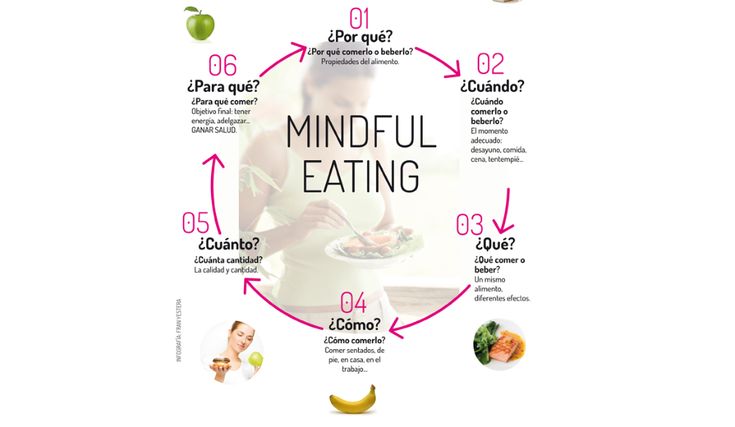
Nutrition is not just about what you eat; it is about the state of mind in which you consume it. Your digestive system is a part of your parasympathetic nervous system, meaning it functions optimally only when you are calm.
Grounding Before You Eat
Many of us eat while rushing or distracted by screens, which triggers a “fight-or-flight” response that inhibits digestion. Integrating grounding mindfulness exercises before your meal signals your body to enter a “rest-and-digest” state. By taking 60 seconds to sit, breathe, and acknowledge your food, you prepare your metabolism for maximum nutrient absorption.
The Five Senses Mindfulness Exercise
Transform every meal into a meditative act by using the five senses mindfulness exercise:
Sight: Appreciate the colors and variety on your plate.
Smell: Inhale the aroma, which stimulates digestive enzymes.
Sound: Listen for the texture and crunch.
Touch: Feel the temperature and texture of the food.
Taste: Chew slowly to fully experience the flavor profiles.
This practice prevents emotional overeating and increases your satiety, helping you recognize when you are genuinely full.
Behavioral Frameworks for Nutritional Success

Dietary consistency is rarely a matter of willpower; it is a matter of behavioral design and psychological resilience.
Subconscious Mind Exercises for Cravings
We often eat for emotional comfort rather than physiological hunger. Utilizing subconscious mind exercises—such as identifying your emotional “triggers” (stress, boredom, fatigue)—allows you to replace the impulse to eat with a more constructive action. When you bring these hidden patterns to light, you stop the automatic loop of mindless snacking and regain control over your nutritional choices.
ACT Mindfulness Exercises for Impulse Control
When a craving hits, use act mindfulness exercises to create space between the impulse and your action. By observing the urge to eat emotionally—without judgment—you treat the craving as a passing data point rather than an urgent command. This psychological “space” allows you to choose foods that serve your long-term health goals.
Frequently Asked Questions (The Master Expert Edition)
Q1: How can I maintain a balanced diet in a social setting?
A: Use dbt mindfulness exercises for groups to manage social pressure. These techniques help you stay true to your health commitments while remaining present and engaging with others, reducing the feelings of isolation.
Q2: What should I do if I have a “bad” day of eating?
A: Avoid the trap of guilt, which leads to further emotional eating. Use act mindfulness exercises to accept the choice as a past event, and focus your next choice on returning to your baseline of nutrient-dense food.
Q3: Can a mindfulness breathing exercise pdf actually help with appetite control?
A: Yes. Practicing controlled, rhythmic breathing (like box breathing) lowers cortisol levels. High cortisol is linked to increased cravings for sugar and fat; lowering it helps restore your natural hunger cues.
Q4: How do I know if I am eating emotionally?
A: Use subconscious mind exercises to perform a quick check-in. Before you eat, ask: “Am I eating to fuel my body, or am I trying to soothe an uncomfortable emotion?”
Q5: Is it better to count calories or focus on food quality?
A: Focus on quality. Calorie counting is a temporary metric, but building an intuition for nutrient-dense food is a lifelong skill. Prioritizing whole, unprocessed foods naturally regulates your caloric intake.
Q6: What is the most common mistake in healthy eating?
A: Being overly restrictive. Restriction leads to burnout. Aim for an “80/20” approach: 80% nutrient-dense, whole foods, and 20% foods that you enjoy purely for pleasure.
Q7: How do I handle cravings without “willpower”?
A: Willpower is a limited resource. Use act mindfulness exercises to “surf the urge”—observe the craving, notice it rising and falling like a wave, and commit to your long-term goal of feeling energized.