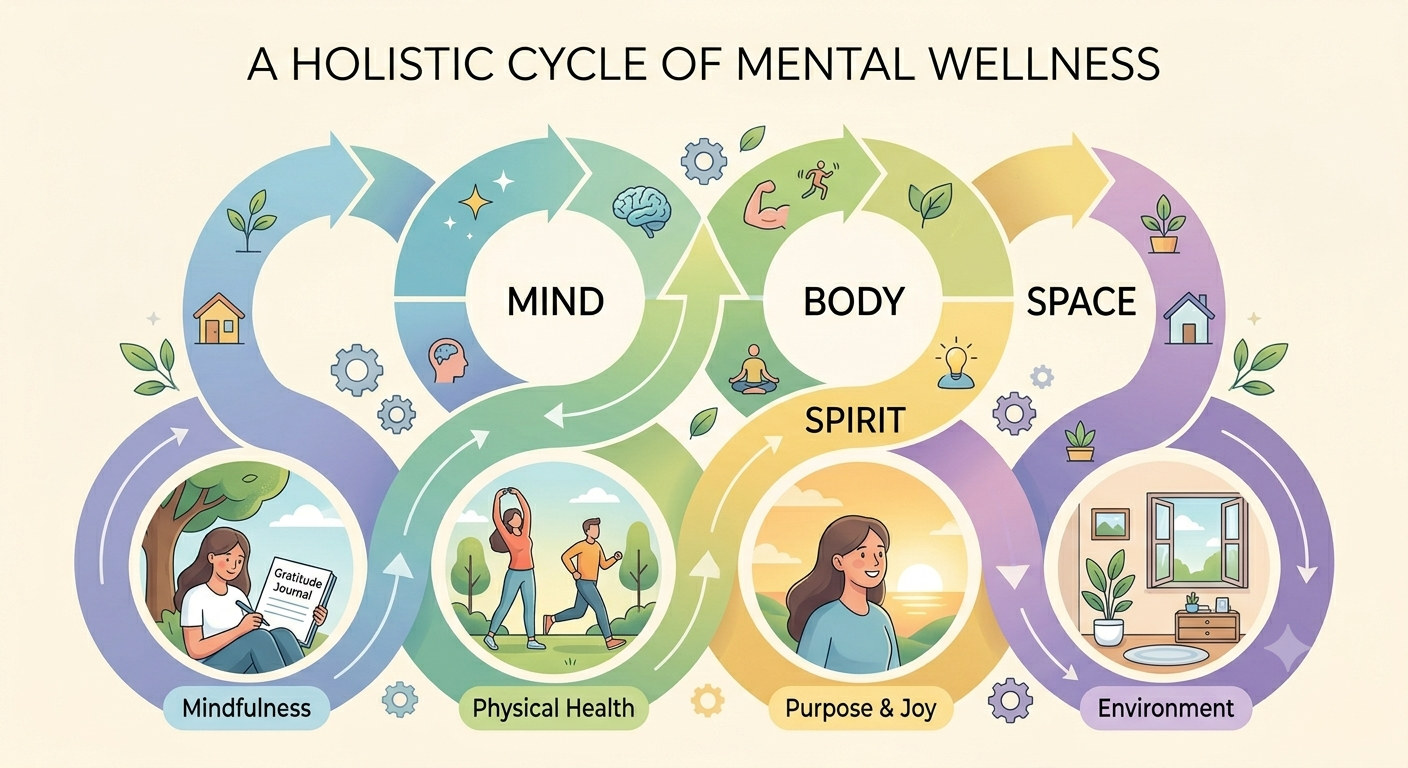





In an era of rapid technological advancement and constant connectivity, the definition of “happiness” is undergoing a significant transformation. No longer viewed as a fleeting emotional state, true well-being is increasingly recognized as a comprehensive ecosystem—a synergy of mental, physical, and digital health. From the rise of “slow living” to the integration of neurobiology in daily rituals, the latest wellness trends are shifting away from superficial self-care toward deep, sustainable mental hygiene. This master guide explores the cutting-edge trends shaping the landscape of mental health and how you can integrate them to unlock a more resilient, balanced version of yourself.
The Neurobiology of Modern Wellness
The most significant trend in mental health today is the “biologization” of happiness. We are moving away from purely talk-based therapy toward a holistic understanding of how our nervous system dictates our emotional state.
Vagal Tone and Nervous System Regulation
Modern wellness centers are prioritizing the regulation of the Vagus Nerve as the primary key to emotional stability. By employing techniques that shift the body from a sympathetic “fight-or-flight” state to a parasympathetic “rest-and-digest” state, individuals are discovering that happiness is often a physiological byproduct of a calm nervous system. Techniques like rhythmic breathing and cold-water immersion are now standard protocols for managing chronic anxiety and burnout.
Practical Rituals for Biological Balance
Digital Fasting: Intentional periods of disconnect are becoming a clinical recommendation. By reducing dopamine spikes caused by constant digital stimulation, you allow your brain’s reward system to recalibrate.
Grounding Mindfulness Exercises: These are no longer just for stress; they are essential tools for grounding the nervous system in the present moment, effectively interrupting the loops of rumination that drive modern unhappiness.
The Cognitive Toolkit for the Future
The “new” mental health toolkit is rooted in cognitive flexibility—the ability to adapt your mindset to changing environments. This goes beyond simple positive thinking; it involves training the brain to handle complexity.
Subconscious Mind Exercises for Resilience
The latest trend in cognitive health involves “reprogramming” the subconscious mind. By moving beyond conscious affirmations and using subconscious mind exercises—such as deep visualization and shadow work—individuals are addressing the root causes of self-sabotaging behaviors. This deeper level of mental hygiene ensures that your daily habits are aligned with your long-term values, rather than being hijacked by hidden fears or outdated trauma responses.
ACT (Acceptance and Commitment Therapy)
ACT has emerged as the gold standard for navigating life’s inevitable challenges. Instead of trying to eliminate negative emotions, act mindfulness exercises teach you to accept them as data points. This acceptance creates a profound sense of freedom; when you stop fighting your internal states, you regain the mental bandwidth to focus on actions that bring genuine fulfillment and happiness.
The Rise of Social and Group-Based Wellness
Loneliness is now recognized as a significant public health crisis, leading to a massive trend toward “communal well-being.” The future of mental health is not found in isolation, but in shared experience.
Collective Healing and Shared Practice
Participating in group mindfulness exercises is becoming increasingly popular. Whether it’s a community breathwork circle or a group-based therapeutic movement class, the shared human energy helps anchor the individual’s focus.
DBT Mindfulness Exercises for Groups: Dialectical Behavior Therapy (DBT) is moving out of clinical settings and into general wellness. Dbt mindfulness exercises for groups offer powerful frameworks for interpersonal effectiveness and distress tolerance. By learning to handle social tensions and personal discomfort in a group, individuals develop a type of “social immunity” that protects them from the isolating effects of modern stress.
Frequently Asked Questions (The Master Expert Edition)
Q1: Why is the trend shifting toward nervous system regulation?
A: Because chronic stress keeps the body in a state of constant survival. By regulating the nervous system first, we provide the brain with a “safe environment” to process emotions and foster happiness.
Q2: What is a simple way to start using subconscious mind exercises?
A: Begin with “Identity-Based Visualization.” Before sleep, spend 5 minutes visualizing yourself reacting to a stressful situation with calm and clarity. This primes your subconscious to adopt these behaviors in real-time.
Q3: How do dbt mindfulness exercises for groups differ from regular therapy?
A: They provide immediate, real-time practice of coping skills. Being in a group allows you to see that your struggles are universal, which immediately alleviates the shame and isolation that often accompany mental health challenges.
Q4: Is it possible to be “too mindful”?
A: True mindfulness is about presence, not hyper-focus on oneself. If you find your practice is making you anxious, use act mindfulness exercises to accept that “anxiety about mindfulness” is just another passing thought, and gently pivot back to your values.
Q5: How does a mindfulness breathing exercise pdf help in an emergency?
A: It provides a structured, external anchor when your internal logic is failing. Having a clear set of steps (like 4-7-8 breathing) helps bypass the chaotic emotional brain and engages the rational prefrontal cortex.
Q6: What is the biggest mistake people make in their wellness routine?
A: Treating it as a “to-do” list rather than a “way of being.” The goal isn’t to complete a task; it’s to develop the internal flexibility to remain balanced, regardless of external circumstances.
Q7: How do I choose the right wellness trend for my personality?
A: Experiment with grounding mindfulness exercises vs. dynamic activities. If you are naturally high-energy, dynamic movement will ground you; if you are naturally introverted, structured stillness like the five senses mindfulness exercise might be more effective.