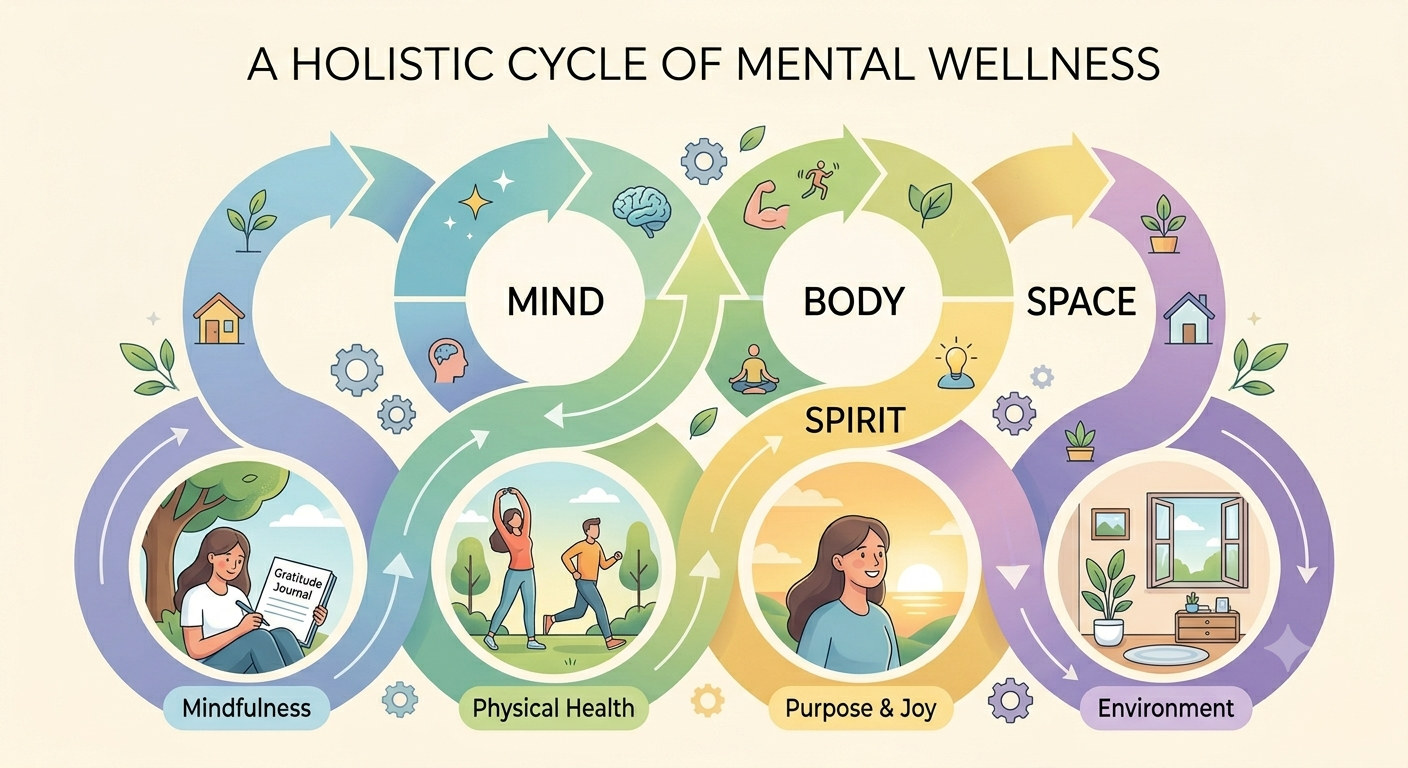
In our modern age, technology is not just a tool; it is the environment in which we live. From the moment we wake up to the last blue-light-induced scroll before sleep, our digital devices dictate our cognitive rhythm. However, this hyper-connectivity comes at a hidden price: chronic stress, diminished cognitive focus, and a loss of personal agency. The Digital Detox movement is a necessary rebellion against this “always-on” culture. This handbook provides a deep, clinical-level exploration of how to preserve your mental health and wellness by mastering your relationship with technology.
Why Mental Wellness Matters in the Digital Age
To understand the necessity of a digital detox, we must look at the neurobiology of the smartphone-human interaction and why our brains are currently struggling to keep up with the pace of the information age.
The Dopamine Feedback Loop and Digital Addiction
Platforms are architected using intermittent variable rewards, which are designed to keep users engaged for as long as possible. Every notification, like, or comment triggers a pulse of dopamine—a neurotransmitter associated with pleasure and reward-seeking behavior. This is not mere “engagement”; it is digital addiction that physically alters the brain’s reward pathways. When you constantly chase this reward, your threshold for natural, slow-paced happiness increases, leading to the feeling of emptiness, boredom, or restlessness when you aren’t connected to your feed.
Chronic Stress and the Cortisol Axis
Living in a state of continuous partial attention keeps your amygdala—the brain’s fear center—in a state of low-grade, chronic activation. This maintains your cortisol levels at a level that, over time, damages your prefrontal cortex. As this area of the brain—responsible for logic, emotional regulation, and deep focus—becomes compromised, you may find it harder to concentrate, make decisions, or manage your temper. This is the physiological basis of digital burnout.
The Impact on Human Cognition and Emotion
The integration of technology into every aspect of life has profound, often overlooked, consequences for our mental framework and emotional landscape.
Cognitive Fragmentation: Our ability to think deeply is being eroded. The constant task-switching required by modern apps prevents the brain from entering a “flow state.” This leads to a degradation in cognitive stamina, making it harder to sustain attention on any single project for a significant amount of time.
The Comparison Trap: Social media exposure fuels an evolutionary drive to compare ourselves to others. Because these feeds are “curated highlight reels,” it leads to deep-seated feelings of inadequacy, fueling cycles of anxiety and depression. When we constantly compare our real lives to others’ carefully edited personas, we lose touch with our own personal sense of self-worth.
The “Biological Clock” Disruption: Blue light is a potent suppressor of melatonin. Poor sleep quality prevents the brain from performing its nightly “clean-up” (glymphatic clearance), which is essential for emotional stability and memory consolidation. By scrolling late into the night, you are actively preventing your brain from healing itself.
The Master Protocol for Digital Wellness
A successful digital detox is not about total abstinence or throwing your device into the ocean; it is about building a system that restores your mental autonomy and gives you space to breathe.
Implementing Grounding Mindfulness Exercises
When the digital noise becomes overwhelming, use grounding mindfulness exercises to anchor yourself. These exercises pull you out of the abstract digital world and return your awareness to the present moment, where life actually happens.
The Five Senses Mindfulness Exercise: This is a simple but powerful tool. Identify 5 things you can see, 4 you can touch, 3 you can hear, 2 you can smell, and 1 you can taste. This technique is clinically proven to reduce the activation of the sympathetic nervous system and bring you back to your physical environment.
Subconscious Mind Exercises for Digital Habit Reform
Our screen usage is often entirely subconscious—we reach for the phone before we even realize we have an urge to do so. Use subconscious mind exercises to create a “pause.” Before opening an app, ask yourself: “Am I doing this to solve a problem, or to escape an uncomfortable emotion?” This transition from unconscious to conscious usage is the cornerstone of effective screen time management.
Community-Based Resilience
If you find it hard to disconnect alone, integrate dbt mindfulness exercises for groups or group mindfulness exercises. Sharing the digital detox journey with others provides social accountability and reinforces the realization that you are not alone in this struggle. It turns a solitary task into a communal effort to improve overall mental health and wellness.
Advanced Cognitive Recovery

To recover from prolonged digital exposure, you must actively train your brain to handle silence and stillness rather than constantly seeking stimulation.
ACT Mindfulness Exercises: Use Acceptance and Commitment Therapy (ACT) techniques to observe your “FOMO” without acting on it. When the urge to check your phone arises, label it: “I am noticing an urge to check my phone because I feel bored.” By labeling the urge, you decouple it from your identity and regain control over your actions.
Mindfulness Breathing Exercises: If you feel the agitation of digital withdrawal, use a mindfulness breathing exercise pdf or practice rhythmic patterns (4-7-8 rhythm). This practice signals your brain that you are safe and grounded in the physical moment, bypassing the stress response triggered by notifications.
Frequently Asked Questions (FAQ)
Q1: What is the most effective way to start a Digital Detox? Start by auditing your environment. Remove “frictionless access” to your phone. If you have to walk to another room to grab your phone, you will check it significantly less often.
Q2: Can mindfulness exercises really undo the damage of social media? While they cannot erase past trauma, they are highly effective at retraining the brain to sustain attention and regulating the nervous system’s stress response.
Q3: How do I handle the anxiety of disconnecting? That anxiety is a sign of your brain’s dependence on dopamine. Use mindfulness grounding exercises whenever the anxiety peaks. It is a temporary state of withdrawal that will subside as your baseline resets.
Q4: Is there a specific protocol for group detoxes? Yes, mindfulness exercises for groups emphasize distress tolerance and interpersonal effectiveness, making them perfect for navigating the challenges of disconnecting while maintaining relationships.
Q5: What if my work requires constant digital presence? Even if you are digitally tethered for work, you can compartmentalize. Use “Analog Intermissions.” Take 10 minutes every two hours to engage in a five senses mindfulness exercise to reset your cognitive load.
Q6: Is screen time management enough, or do I need more? Screen time management is a tool, but it is not a cure. You need to combine it with a consistent practice of act mindfulness exercises to ensure that your relationship with technology remains a conscious choice, not a compulsive addiction.
Disclaimer
The information provided in this article is for educational and informational purposes only and is not intended as a substitute for professional medical advice, diagnosis, or treatment. Always seek the advice of your physician or other qualified health provider with any questions you may have regarding a medical condition or mental health concerns. Never disregard professional medical advice or delay in seeking it because of something you have read here. If you are experiencing a mental health crisis, please contact your local emergency services or a licensed mental health professional immediately.